Trial of electric motor without rare earth in India: Preparations to reduce dependence on China; China has 70% of the world’s rare earth material
To deal with China’s increasing control and export restrictions on rare earth metal used in making motors for electric vehicles (EV), Indian companies are now testing motors without rare earth.
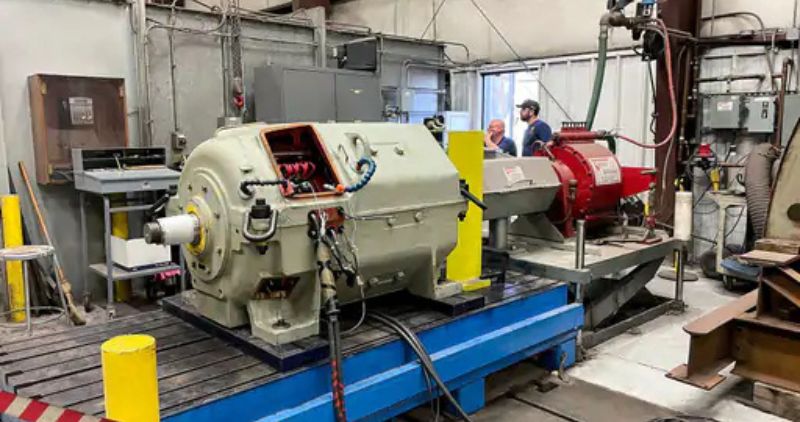
According to the Economic Times report, Indian companies like Photonic Solutions and Sterling GTK E-Mobility have started tests of magnet-free motors in a 3,500 square feet lab in Faridabad.
These motors are made with the technology of Britain’s Advanced Electric Machines, which generate power from tightly wound metal coils. That is, tightly wrapped metal coils are used to generate power instead of permanent magnets in these motors.
If their trial is successful, it can be a big change in the EV market and our dependence on China can be reduced.
Where are rare earth metals used in vehicles?
Rare metals are used especially in electric vehicles. They are used to make compact and high performance magnets for permanent magnet electric motors.
These magnets, made of elements like neodymium, dysprosium and terbium, make motors smaller, lighter and more efficient than other motors, which improves the range and performance of EVs.
They are also used in components like catalytic converters installed in petrol-diesel vehicles. Apart from this, these metals are used in many systems installed in the vehicle, from sensors to displays.
China has a share of about 70% in the mining of rare materials
Let us tell you that at the global level, China’s share in the mining of rare materials is about 70% and in production it is up to 90%. China recently banned the export of 7 precious metals (rare earth materials) amid the growing trade war with the US.
China has also blocked shipments of magnets needed to assemble everything from cars, drones to robots and missiles at Chinese ports. These materials are extremely important for automobile, semiconductor and aerospace businesses.