These Indian companies are developing ‘rare-earth-free’ motors. Find out what the benefits will be.
Indian manufacturing and mobility startups are currently moving rapidly towards reducing their dependence on rare-earth magnets. These magnets are a crucial component of electric vehicle (EV) motors and industrial robots. However, China accounts for approximately 90% of the global supply.
On April 4th, China imposed new restrictions on its rare-earth exports. This was in response to the tariffs imposed by the US on April 2nd. However, this exposed the vulnerabilities of India’s emerging EV ecosystem.
Motors without rare-earths being developed in India
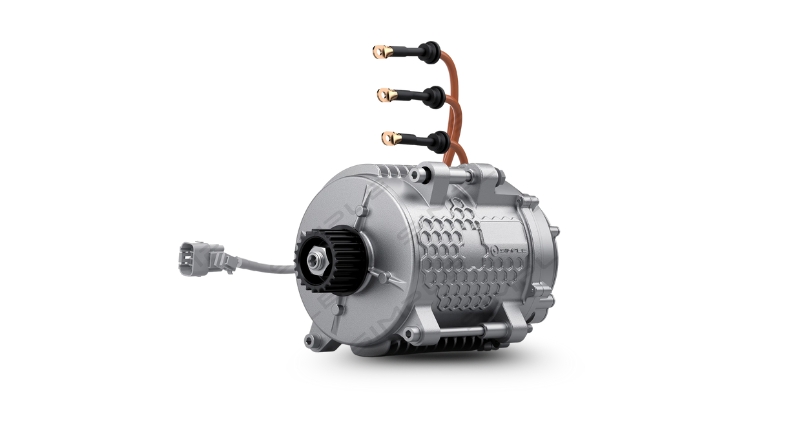
Bengaluru-based Chara Technologies has developed synchronous reluctance motors that completely eliminate the need for rare-earth magnets. The company has also started shipping motors this year after opening its factory in Peenya, Bengaluru. The company aims to achieve revenue of ₹30 crore in FY26, up from ₹3 crore last year.
Bhaktha Keshavachar, founder and CEO of the company, said, “Rare-earth magnets are required to manufacture permanent magnet synchronous motors. But these are expensive and difficult to obtain due to the Chinese restrictions. So we had to find alternatives.”
What are the strategies of other startups?
Chennai-based Sthyr Energy is also currently exploring rare-earth technology options. It is working on zinc-air batteries in collaboration with researchers at IIT Madras. Founder Gunjan Kapadia said, “We are already significantly less dependent on rare earths and are constantly looking for alternative solutions.”
Meanwhile, Ati Motors, a manufacturer of autonomous industrial robots, is turning to ferrite motors. The company’s CEO, Saurabh Chandra, said, “This approach is not cost-effective at the moment, but it will be soon.”
EV companies like Ather Energy and Ola Electric are also redesigning their motors. Furthermore, Simple Energy has gone a step further, becoming the first Indian OEM company to commercially produce rare-earth-free motors. Speaking to Moneycontrol, the company’s founder, Suhas Rajkumar, said, “The challenges facing the global supply chain have made it clear that India must become self-reliant. ‘Make in India’ is no longer just a slogan, but a necessity.”
Policy and Collaboration
Several other countries, including the US, UK, Canada, and Israel, are also working on rare-earth-free technologies. Research is underway on new metals like tetrataenite, manganese-bismuth, and iron nitride.
Meanwhile, Indian industrialists have met with Commerce Minister Piyush Goyal and heavy industry ministers to seek incentives for rare-earth options. One founder explained, “We’ve told the government that both mining and ultra-native technologies should be supported, as both aim to achieve supply chain independence.”
However, this shift will require some compromises. For example, rare-earth-free motors are slightly heavier; Chara’s 3-wheeler motor weighs 18 kilograms, compared to a rare-earth-based motor weighing 15 kilograms. However, this difference is minimal for a 750-kilogram autorickshaw. The industry believes that as manufacturing scales up, costs will also decrease.