Ola Electric develops rare-earth metal-free motor: Government approval for India’s first ferrite motor; this will reduce dependence on China
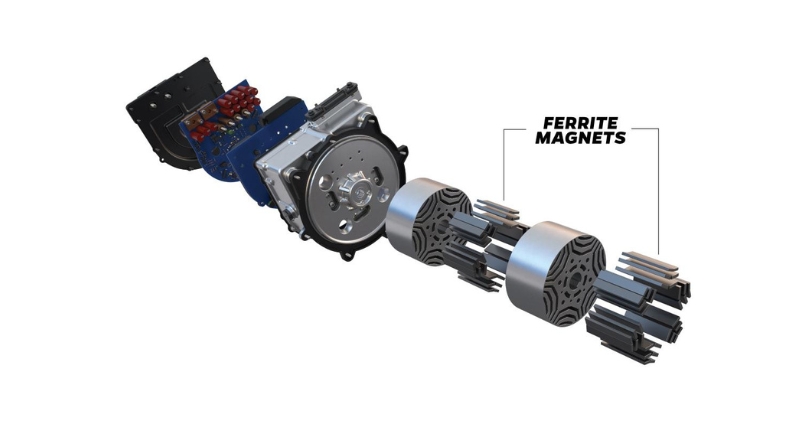
Electric vehicle (EV) manufacturer Ola Electric has developed the country’s first rare-earth metal-free two-wheeler ferrite motor. This motor has also been approved by the government.
Currently, India relies on China for electric vehicle motor manufacturing. Whenever China bans the export of rare-earth metals, electric motor production in India is affected.
In such a situation, technology without rare-earth metals will reduce India’s dependence on China. Ola Electric stated that its battery has received certification from the Global Automotive Research Centre (GARC) in Tamil Nadu.
GARC has tested this Ola motor according to the AIS 041 standards set by the Ministry of Road Transport.
The motor will be cheaper, reducing dependence on other countries.
Ola Electric first showcased this ferrite motor technology during its ‘Sankalp 2025’ program in August this year. The new ferrite motor, in both 7kW and 11kW models, performs as well as motors that use rare earth metals.
Ola Electric states that the ferrite motor offers the same capacity, performance, and durability, but at a much lower cost. Furthermore, it will eliminate the risk of supply chain fluctuations, making scooter manufacturing easier and cheaper.
Where are rare earth metals used in vehicles?
Rare earth metals are particularly used in electric vehicles. They are used to make compact and high-performance magnets for permanent magnet electric motors.
Made from elements like neodymium, dysprosium, and terbium, these magnets make motors smaller, lighter, and more efficient than other types of motors, improving the range and performance of EVs.
They are also used in components like catalytic converters in petrol and diesel vehicles. These metals are also used in many vehicle systems, from sensors to displays.