HAL-Safran Agreement: Critical LEAP Engine Parts to be Made in India; ‘Make in India’ Initiative Gets a Boost
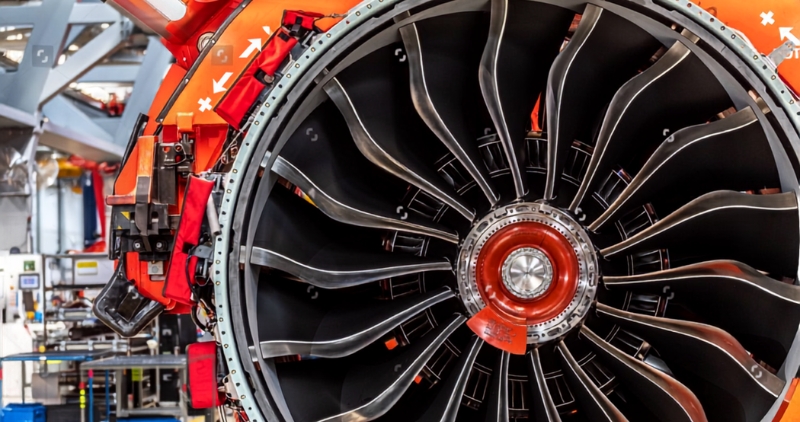
India’s leading defense and aerospace company, Hindustan Aeronautics Limited (HAL), and France’s Safran Aircraft Engines have signed a long-term agreement for the production and supply of superalloy turbine ring forgings for the CFM LEAP engine program. This agreement will not only strengthen India’s ‘Make in India’ initiative but also reinforce the country’s role in the global aerospace supply chain.
What did HAL say?
In a post on the social media platform X on Wednesday, HAL stated, “Hindustan Aeronautics Limited (HAL) and Safran Aircraft Engines have signed a long-term agreement for the production and supply of superalloy turbine ring forgings for the CFM LEAP engine program.”
Who was present during the agreement?
The agreement was signed between Praveen B., General Manager of HAL’s Foundry and Forge Division, and Dominique Dupuy, Senior Vice President (Purchasing) at Safran Aircraft Engines, during the Farnborough International Airshow. HAL Chairman and Managing Director Ravi K. and Bengaluru Complex CEO Jayakrishnan S. were also present on the occasion.
What does the agreement entail?
Under this agreement, HAL will manufacture near-net-shape superalloy ring forgings for LEAP engines at the state-of-the-art ring rolling facility of its Foundry and Forge Division in Bengaluru. These specialized metal ring forgings are used in the section of the aircraft engine where superior performance and reliability must be maintained amidst extreme temperatures and high speeds. The LEAP engine was developed by CFM International—a joint venture between GE Aerospace and Safran—and powers popular passenger aircraft such as the Airbus A320neo, Boeing 737 MAX, and COMAC C919. HAL’s participation in this global program is considered a significant milestone for the Indian aerospace industry.
What did the HAL Chairman say?
HAL Chairman and Managing Director Ravi K. stated that HAL and Safran have shared a strong and trusted partnership spanning several decades. This new long-term agreement demonstrates the growing confidence of leading global aerospace companies in HAL’s technical capabilities and manufacturing quality.
He noted that by contributing to the LEAP engine program, HAL would further strengthen its presence in the international civil aviation market. Additionally, this partnership will play a crucial role in developing advanced manufacturing technologies and capabilities for future aero-engine programs in India.
Dominique Dupuy, Senior Vice President at Safran Aircraft Engines, expressed the company’s enthusiasm for advancing this partnership with HAL. According to him, LEAP engine production is being ramped up to meet rising global demand, and developing a local supply chain is a key component of the company’s strategy.
How much cargo can the airship carry?
This airship is capable of carrying up to 60 tonnes of cargo and incorporates modern technologies such as vertical take-off and landing (VTOL), minimal ground infrastructure requirements, and hybrid-electric propulsion.