Smartphones to get network coverage without mobile towers: TRAI approves satellite-based D2D service; 20-year licenses to be granted.
Now, even in the absence of mobile towers—whether in mountains, forests, or remote, isolated areas—your phone will not lose its network connection.
India’s telecom regulator, TRAI (Telecom Regulatory Authority of India), has recommended new regulations that will allow your smartphone to connect directly to satellites in space.
Under this new framework, telecom operators like Jio or Airtel will not need to deploy their own expensive satellite infrastructure.
Instead, they can lease network capacity from satellite manufacturers to provide services to their customers. For this purpose, companies will be granted licenses to operate nationwide for a period of 20 years.
Smartphones to connect directly from space.
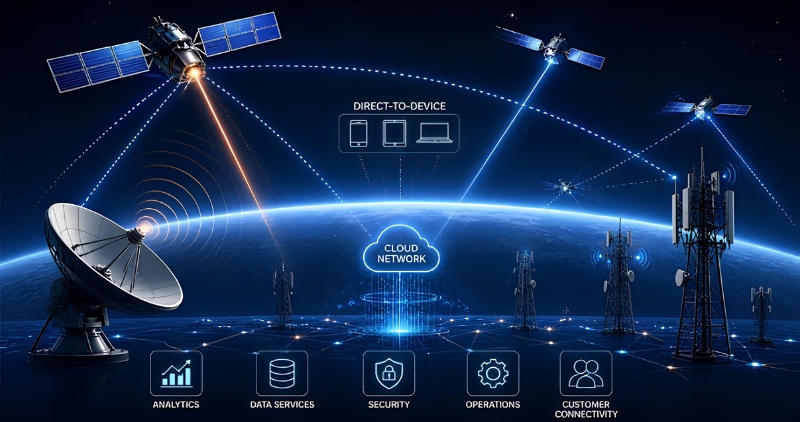
The core of this new initiative is ‘Direct-to-Device’ (D2D) technology. TRAI has recommended the allocation of spectrum for this, enabling your standard smartphone to connect directly to satellites in space without the need for any additional hardware.
The primary advantage is that even in challenging environments—such as mountains, dense forests, or the middle of the ocean—or during disasters like floods or cyclones, when terrestrial mobile towers may cease to function, your phone will remain capable of handling calls and accessing the internet.
No need for companies to build costly infrastructure.
Currently, several entities—including Elon Musk’s ‘Starlink’, Airtel’s partner ‘Eutelsat OneWeb’, and Reliance Jio—are competing to introduce satellite-based internet services in India.
These new regulations from TRAI will save mobile operators like Jio, Airtel, and Vodafone-Idea (Vi) from significant capital expenditure.
They will no longer need to launch their own expensive satellites into space. Instead, they can easily form partnerships with satellite providers, lease their network capacity, and offer satellite-based services directly to their own subscribers.