Major FSSAI Crackdown: Samples of All Leading Brands—Including Bisleri—Seized; Here’s What Has Been Revealed
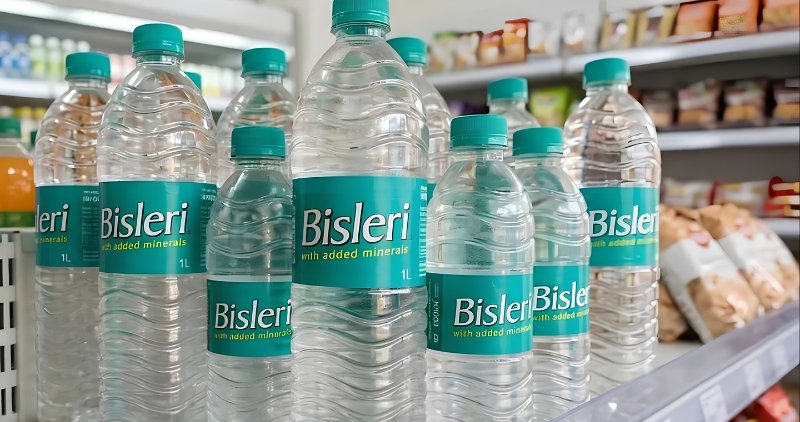
The food safety regulator has adopted an aggressive stance regarding the quality of bottled and packaged drinking water sold across the country. As part of an ongoing enforcement drive, the Food Safety and Standards Authority of India (FSSAI) has collected samples from all major packaged drinking water brands, including Bisleri. According to sources, the regulator has made it clear that any company failing to meet safety standards in laboratory tests will face immediate and strict legal action. The recent approval to initiate legal proceedings against market leader Bisleri International is part of this nationwide investigation, which has sent shockwaves through the entire beverage and packaged food sector.
What is the FSSAI’s nationwide campaign, and why is it being conducted?
In the interest of public health and safety, the regulator has launched comprehensive inspections of the premises of Food Business Operators (FBOs) involved in the packaged water industry.
Surprise Inspections: FSSAI officials have visited the manufacturing units and business premises of major brands to collect samples directly from the production sites.
Samples for Laboratory Testing: All these samples have been sent to laboratories for quality and chemical analysis.
Direct Legal Action: According to sources, if any company’s sample fails the test or if it is found to be in violation of regulations, the regulator will initiate legal proceedings against them without any leniency.
Why was legal action approved against Bisleri International?
The most significant action taken during this campaign involves the industry leader, Bisleri International Private Limited.
Case of Unsafe Water: In a social media post on Sunday, the FSSAI announced that it has granted approval to initiate legal proceedings against Bisleri on charges of selling “unsafe packaged drinking water.” Violation of Bromate Limits: A regulatory sample of ‘packaged drinking water (other than mineral water)’ collected from Bisleri’s premises was found to contain bromate levels exceeding the prescribed limit. Consequently, it was declared ‘unsafe’ under the Food Safety and Standards Act, 2006 (FSS Act).
Failure at the Referral Lab: When the company appealed against this finding, the sample was sent to a referral food laboratory. There, too, it was declared ‘unsafe’ after the detection of poly-nuclear aromatic hydrocarbons (PAHs). Following this, the regulator greenlit legal action under the law.
How did Bisleri respond to the regulator’s strict action?
Following reports of the legal proceedings, Bisleri International clarified its position on Monday, asserting that its product is completely safe.
Claim of Not Receiving an Official Notice: The company stated that it has not yet received any notice from the FSSAI—neither via email nor in hard copy—nor has it been able to locate any such notice on the regulator’s website.
Citing Over 90 Quality Checks: The company emphasized that the safety of its drinking water is its top priority. It conducts over 90 rigorous quality tests throughout its 10-step manufacturing process.
Assurance of Cooperation: Bisleri reiterated that its packaged water is entirely ‘safe’ for consumption and that it will cooperate fully with the food regulator to resolve the matter.
What does this mean for the packaged drinking water sector?
India’s packaged drinking water market is growing rapidly, comprising both established corporate entities and numerous regional players. The fact that the FSSAI has collected samples from all major brands indicates that this action is not limited to any single company; rather, it constitutes a regulatory review of the supply chain and manufacturing processes across the entire industry. Rigorous laboratory monitoring for substances such as bromate and PAHs will increase the cost of quality compliance for packaged water brands, and only those players capable of meeting stringent safety standards will be able to survive in the market.