Semiconductors to be Made in India: Work Begins at CG SEMI OSAT Facility in Gujarat; PM Modi Inaugurates the Project
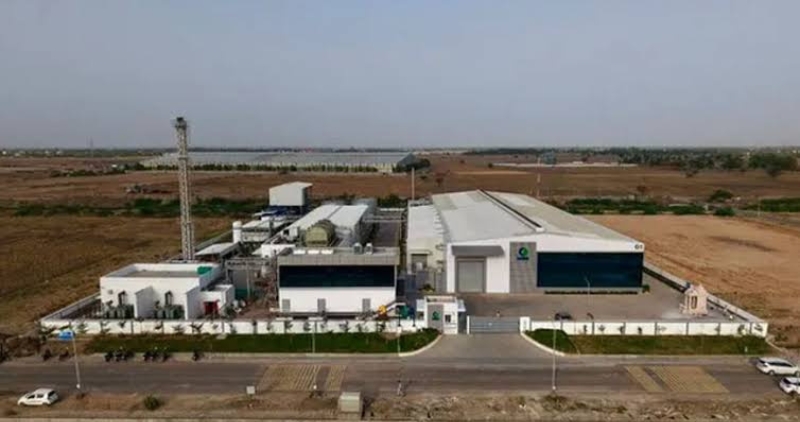
Commercial production has commenced at the CG Semi Outsourced Semiconductor Assembly and Test (OSAT) facility in Sanand, Gujarat; the facility was inaugurated by Prime Minister Narendra Modi. This is India’s third semiconductor plant, set to become operational in 2026. It is part of a major initiative to build a semiconductor manufacturing ecosystem in the country. PM Modi credited the engineers, employees, and industry partners for the rapid pace of work. Here are the details:
The Prime Minister stated that this reflects India’s sustained growth under the ‘Design in India’ and ‘Make in India’ frameworks. The objective is to strengthen the entire electronics value chain, from design to manufacturing. India’s semiconductor journey represents the next step in the electronics revolution that has unfolded over the past decade—progressing from finished products to components, and now to semiconductors.
Project Timeline and Completion Process
Work on the project began in March 2024. Chip testing commenced in August 2025, while commercial production started in July 2026. Ashwini Vaishnaw noted that the project completion timeline is approximately 27 months.
The CG SEMI OSAT facility has been developed in partnership with the Japanese company Renesas Electronics. It involves an investment of over ₹7,600 crore, driven by collaboration between Indian, Japanese, and Thai entities. Its current annual capacity is 200 million (20 crore) units, with plans to expand this to 5 billion (500 crore) units annually in the future. These chips will be used in automotive systems, scooters, and industrial equipment. There are plans to export them from India to Japan, the United States, and Europe. Prime Minister Modi emphasized that semiconductor manufacturing relies on ecosystem-based growth rather than isolated units. Sanand is now emerging as a semiconductor cluster akin to global hubs like Silicon Valley, Hsinchu Science Park, and Tsukuba Science City. Companies already present in the area include Micron, Kaynes, and CG Semi. This ecosystem is expected to expand further with the inclusion of industries such as chemical suppliers, testing facilities, design centers, and semiconductor startups.