Tech Giants Clash Over AI Risks! Nvidia CEO Makes Bold Claim
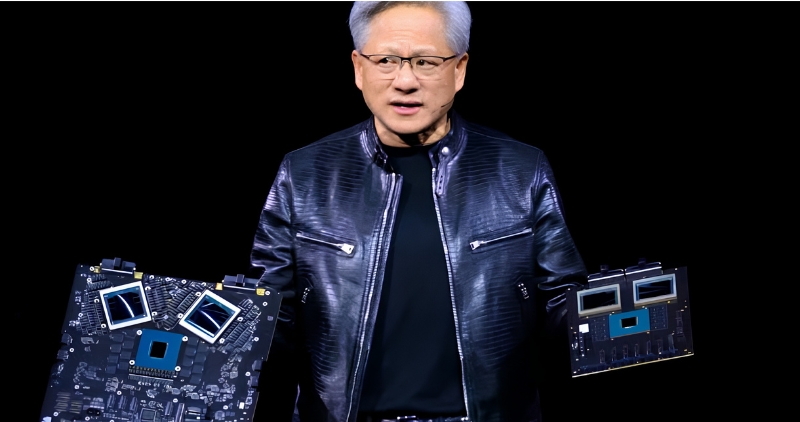
As AI accelerates in pace and expands its scope, concerns regarding the future and survival of humanity are deepening. These include predictions that the world could end by 2030 due to AI. However, Nvidia CEO Jensen Huang recently dismissed these fears. Speaking to CBS News, Huang stated there is a “zero percent chance” of the world ending in 2030 because of AI. He suggested that such predictions might be driven by political, commercial, or attention-seeking motives. It is worth noting that the rapid advancement of AI is no longer a concern solely for tech experts; top executives at major global tech companies are also appearing cautious about its trajectory and potential risks.
‘Pace of Development Should Not Slow Down’
Huang argues that instead of slowing down AI development, companies should move forward rapidly while also upholding their responsibility for safety. He stated, “We should move as fast as possible.” However, Huang also clarified that companies should not release products to the market that are neither ready nor safe. He maintains that AI development should accelerate America’s technological and economic progress, but product safety must not be compromised in this race.
Huang has previously opposed AI-related regulations, arguing that AI safety should be the responsibility of the companies themselves. Nvidia is a major supplier of the processors and computing infrastructure essential to the AI industry.
Amodei Emphasizes Slowing Down AI’s Pace
Anthropic CEO Dario Amodei recently spoke about slowing down the capabilities of AI models. However, he clarified that this does not mean completely halting the training of AI models or stopping technological progress. OpenAI CEO Sam Altman has endorsed Dario Amodei’s views on this matter. Earlier in 2023, several tech leaders—including Sam Altman, Dario Amodei, and Google DeepMind co-founder Demis Hassabis—had emphasized the need to mitigate the existential risk AI poses to humanity; however, Jensen Huang did not sign that statement.
This divergence of opinion regarding the pace, safety, and regulation of AI highlights the lack of consensus within the tech sector on how to strike a balance between the development of highly advanced AI and its potential risks.