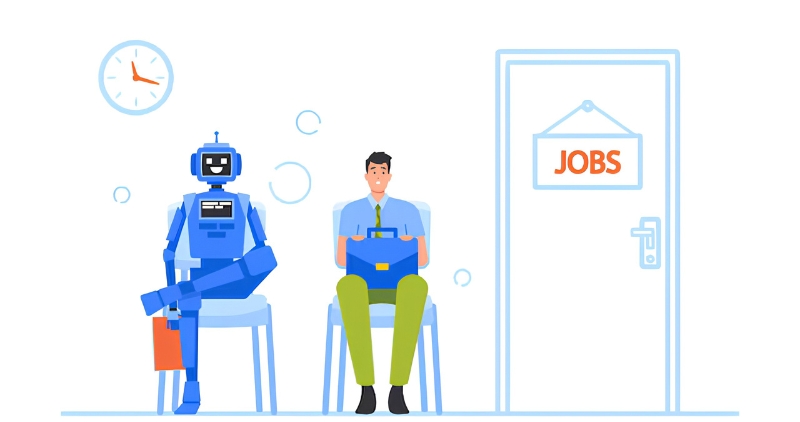
AI is eating up entry-level jobs; finding that first job after college is set to become harder for young people!
A debate has been raging in the industry for some time regarding the impact of AI on jobs. While experts on one side warn of a significant blow to employment due to AI, others argue that it will boost productivity. However, new research has now raised fresh concerns for young people. The study reveals that the advent of AI will make securing entry-level jobs increasingly difficult. In other words, AI could pose a major challenge for young graduates entering the industry in search of their first job. Let’s take a look at what the study says.
One of the primary fears surrounding Artificial Intelligence is the potential elimination of jobs. Hundreds of reports have highlighted a looming crisis for employment caused by smart AI systems, as these systems can perform most human tasks at a lower cost. Now, however, research from Stanford University has sparked new anxiety among the youth. Economists at the university found that AI is significantly impacting entry-level jobs for young employees in certain sectors, whereas older workers have largely remained unaffected so far.
Is Artificial Intelligence (AI) impacting jobs? The answer to this question is now a source of new concern for young people. A research paper titled “Canaries in the Coal Mine? Six Facts About AI’s Impact on Employment” presents new facts and figures regarding AI’s effect on jobs. The August 2026 edition updates and revises a paper published last year under the same title, incorporating new data and improved statistics.
In this new study, Stanford researchers found that the employment trends observed last year for entry-level workers are persisting and even intensifying. Specifically, young people aged 22 to 25 are identified as the group most affected by AI; their employment levels have dropped by 19 percent. This decline has been observed in comparison to sectors where AI has brought about fewer changes; essentially, wherever AI has made an impact, young employees or entry-level roles have been most affected. Last year, this figure was 13 percent lower.
The findings indicate that the employment outlook for entry-level workers is bleakest in jobs that heavily utilize AI automation. A senior professional with experience and a strong social network faces a lower risk of job loss due to AI compared to a young person. Young college graduates seeking entry-level positions may well face a vastly different landscape in the near future.