
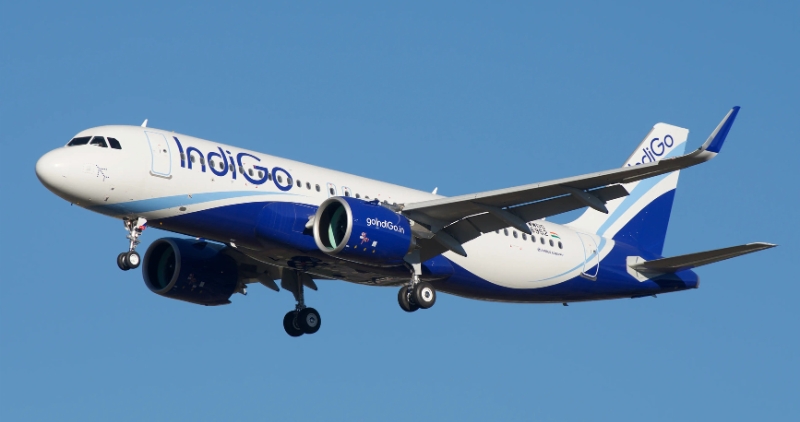
Aviation: High fuel costs lead to a ₹1,879 crore loss for IndiGo; CEO says there is no option but to raise fares
Rising aviation turbine fuel (ATF) prices and a weakening rupee have dealt a major blow to the profits of IndiGo, the country’s largest airline. In the September quarter, the company incurred a loss of ₹1,879.1 crore, even as it recorded a significant increase in its total revenue. This raises a question: at a time when lower fares are typically needed to boost demand for tickets, why is the airline being forced to raise prices?
IndiGo’s CEO notes that while the company’s strong financial position and low-cost business model provide some cushion, raising fares has become necessary to offset the soaring expenditure on fuel.
Did IndiGo incur a loss despite an increase in revenue?
The total revenue of InterGlobe Aviation, the parent company of IndiGo, rose to ₹24,311.9 crore in the September quarter of the current financial year—up from ₹19,599.5 crore in the same period a year ago. This represents an increase of approximately 24 percent in the company’s revenue.
However, despite this growth in revenue, the company could not turn a profit. Its total expenditure for the September quarter climbed to ₹26,188.4 crore, exceeding its total revenue by ₹1,876.5 crore. Consequently, the company reported a loss of ₹1,879.1 crore for the period.
In simple terms, while the company’s revenue is growing, a sharp rise in operational costs is preventing that growth from translating into profit.
What is the primary reason for the increase in IndiGo’s losses?
The biggest challenge for the airline is the surge in aviation fuel prices. During the September quarter, IndiGo’s expenditure on aviation fuel jumped by 67.2 percent, reaching ₹9,966.8 crore. Fuel is one of the most significant expenses for any airline. As the number of flights operated by an aircraft increases, so does its fuel consumption. When fuel prices rise, the cost of operating flights also goes up.
Furthermore, the weakening of the rupee has placed additional pressure on the company’s financial position. Many expenses in the aviation sector are denominated in foreign currency; consequently, a decline in the value of the rupee against the US dollar makes it more expensive for an airline to cover these costs.
According to the company, exceptionally high fuel costs and the depreciation of the rupee have impacted its profitability.
Will IndiGo implement major cost-cutting measures?
In his first media interaction since assuming the role of CEO in August, Willie Walsh stated that IndiGo’s cost structure is already highly efficient. The company operates from a position of financial strength, with ample cash reserves.
According to Walsh, this strong cash position provides IndiGo with options that may not be available to many of its competitors. While the company might consider targeted measures to reduce certain expenses if necessary, large-scale cost-cutting should not be expected at this time.
IndiGo noted that its business model is already built on a low-cost structure. Therefore, rather than taking drastic steps to slash expenses, the airline intends to address rising costs through other strategic approaches.
Will airfares increase further?
Rising fuel prices and geopolitical uncertainties—stemming from the crisis in West Asia—have driven up operational costs for airlines. This has had a direct impact on airfares. Airlines, including IndiGo, have begun imposing fuel surcharges on tickets.
Walsh stated that IndiGo aims to keep fare increases to a minimum. Low airfares in India have been instrumental in driving demand for air travel; however, raising fares has become necessary to offset the substantial surge in fuel costs. This means that instead of bearing the entire burden of costs themselves, airlines might pass a portion of it on to passengers. However, Walsh did not specify the extent of any potential fare increases.
What will be the impact on passengers and the aviation sector?
If fuel prices remain high, airlines may continue to face pressure to raise fares, which could make air travel more expensive for passengers. On the other hand, lower fares play a crucial role in driving demand for air travel. Consequently, airlines face the challenge of striking a balance between recovering their costs and offering affordable tickets to passengers.
For IndiGo, a strong cash position and an efficient cost structure may provide some relief; however, data from the September quarter indicates that even rising revenues were not enough to fully offset the impact of higher fuel expenses.


